


-

 Studier
og studietilbud
-

 Student
og studietiden
-

 Forskning
og innovasjon


Biomedical Laboratory Scientist
As a Biomedical Laboratory Scientist student, you will combine subjects from natural science, social science and medical laboratory science. You will develop skills and learn to use technology that will contribute to better prevention, diagnosis, treatment and monitoring of disease.
The study program will focus on biomedical laboratory technology within different areas, such as:
• Body chemistry and disease processes in living organisms
• Blood and blood disorders
• Microorganisms, such as bacteria, viruses and fungi
• Immune system and the body's defense mechanisms against diseases
• Genetics and genetic engineering methods
• Cell biology
• Pathology
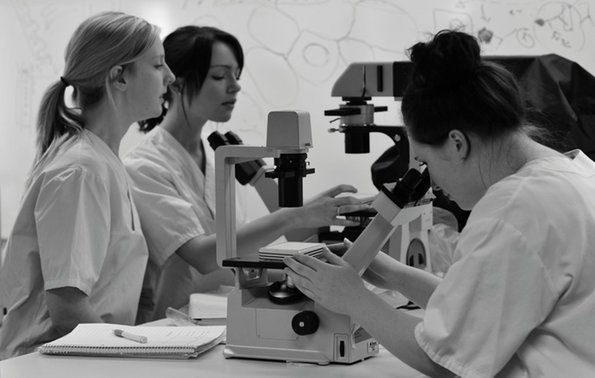
Research-based teaching
Employees at the Biomedical laboratory scientist program at HiST runs advanced medical research. The program has two professors and five doctoral candidates and is a partner in the “Centre for excellent research”, in collaboration with NTNU and St. Olav's Hospital. This will also be an advantage for the students, as it gives access to interesting and good bachelor theses, and updated and research-based teaching.
Teaching methods
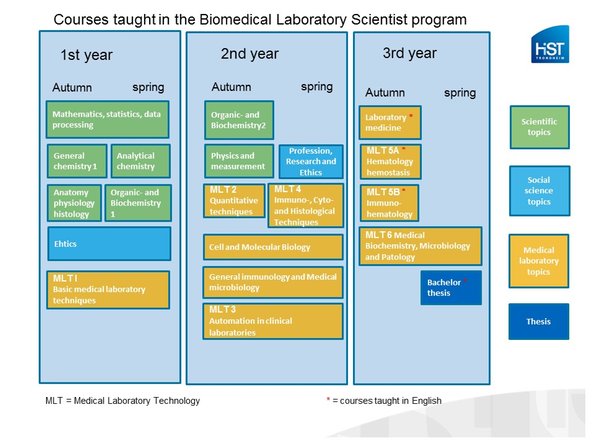
The most common teaching methods is lectures and group work, large and small practical laboratory assignments and projects. Practical training is of great importance throughout the study. The program terminates with a bachelor thesis in the spring of year 3.
|
Bachelor program for Biomedical Laboratory Scientist |
|
||||||
|
|
|||||||
|
Autumn (ECTS) |
Spring (ECTS) |
||||||
|
First year courses |
|
||||||
|
10 |
|
||||||
|
General chemistry 1 |
10 |
|
|||||
|
5 |
5 |
|
|||||
|
Analytical chemistry |
7,5 |
|
|||||
|
3 |
7 |
|
|||||
|
Organic and Biochemistry 1 |
7,5 |
|
|||||
|
Ethics |
2 |
3 |
|
||||
|
|
|||||||
|
Second year courses |
|
||||||
|
7,5 |
|
||||||
|
7,5 |
|
||||||
|
Organic and Biochemistry 2 |
7,5 |
|
|||||
|
3 |
6 |
|
|||||
|
2,5 |
5 |
|
|||||
|
2 |
7 |
|
|||||
|
6 |
|
||||||
|
Profession, Research and Etics |
6 |
|
|||||
|
|
|||||||
|
Third year courses |
|
||||||
|
8 |
|
||||||
|
6 |
|
||||||
|
6 |
|
||||||
|
7 |
13 |
|
|||||
|
3 |
17 |
|
|||||


Høgskolen i Sør-Trøndelag - HiST
Pb 2320. 7004 Trondheim
Tlf.: 73 55 90 00
Faks: 73 55 90 51
E-post: postmottak@hist.no
Kunnskapen du trenger


