LISA05 Blog
Revision as of 01:24, 7 Dec 2005; view current revision
←Older revision | Newer revision→
LISA'05 Blog
On Friday, December 2nd 2005, four brave members of the staff at Oslo University College depart for San Diego. Their objective:
- To attend the Large Installation System Administration Conference (LISA '05) (http://www.usenix.org/events/lisa05/).
You can follow their exciting journey, as they eat, sleep and inhale the adventure that is LISA. Watch this space to get updated information as the events unfold.
Day 4, Tuesday
Day 3, Monday
Day 2, Sunday
Day 1, Saturday
There really is not much happing today, as far as LISA is conserned. We just registered, and use the oportunity to get online as well. We used some of the time earlier today to do some work.
Simen's notes
Visualization can be used to improve understanding of complex matters. The idea is to create a simple interface that can be used to set up a simple scene. The framework can be controlled with only a few parameters. The interface can presented both as a 3-dimensional and a classic 2D graphical user interface (GUI). After the initial setup of the display, the visualization is controlled by modifying only a small number of parameters. The system will consist of two main parts.
- The visualization engine
- The plug-ins (monitors)
The visualization engine is just a simple interface with which the plug-ins will communicate. The communication will be done through a network socket. This allows for distributed plug-ins. It also allows for the plug-ins to be written in any language, as long as it can send and receive messages through the network.
Each plug-in will typically represent one input to the system. It may represent a single machine or network, or it may represent a property of a machine or network. By using several monitors, a complex picture of the whole system can be monitored with relative ease.
Mark's summary of our discussion
Simen's visualization
Visualization can cover everything from the model of policy in terms
of graphs and promises to data observed and measured as consequences
of those choices. Therefore we should combine models from reliability
theory (fault/cause trees) with time series models and anomaly detectors,
logging engines and controllers.
Tie this to a cfengine user base. Combine a policy-based view of
visualization with a control interface for setting policy? A good idea
is to build the research around a prototype that will run on
Unix and Windows. Then people (esp cfenigne users) will start to use
this and we will get a whole bunch of feedback from real users.
Policy-based visualization means being able to decide how events and
states are visualized, so as to maximize the comprehensibilty of the
data. Here are some ideas for visualizing complex data.
- Tunnel vision (3d tunnel - curvature and walls and floor are paramters)
- Fish eye vision (retinax)
- Syslog with multimedia objects
In terms of abstractions, we want to attach multimedia representations to:
- Discrete (graphs, events)
- Continuum inputs (time series etc)
Siri + Kyrre overlap project
The only example of autonomous agents that is currently in widespread
use is BGP. Make a promise and Maude simulation of BGP. How do
promises get amde in Maude?
Game payoff - how does it fit in?
Payoff is a subjective function of the measurements.
There is an analogy with routing
- Metrics (or utility factor for decision-making)
- Policy (bgp)
OSPF etc are like legacy systems that simply assume cooperation
tacitly. As a result they do not scale well etc. Compare how OSPF and
RIP networks look in terms of promises. RIP only promises its nearest
neighbours. OSPF promises to listen to any flooded message.
Maud is a realization of the policy ideas that is more concrete than
Event Calculus?? We should look at this other work by people in London
using temporal logics and try to relate it.
Kyrre and Siri should formulate a version of promises in Maude
language so we can explain our work to the Oslo group in their
own language.
Promises can be viewed as logic, but the are also a stepping stone to
methods of approximation. e.g. a promise may be subject to noise and
fluctuations from the environment, thus, while the ideas might be
logically consistent in spirit, the details could fall short of this
idea.
How do our projects fit into the magix goals? We want to make a
Maude/promise presentation for the MAGIX/Promise workshop, and also to
engage a discussion with UiO.. This is about networking and about
policy.
|
Specifying networks and systems in Maude
Maude (http://maude.cs.uiuc.edu/) is a formal specification and analysis tool based on rewriting logic.
Pictures

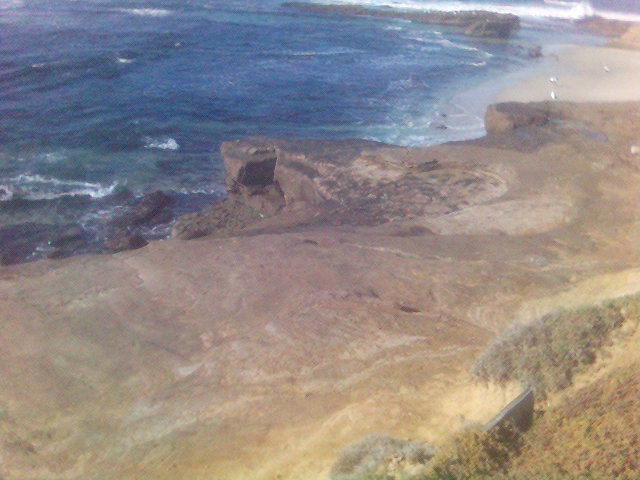
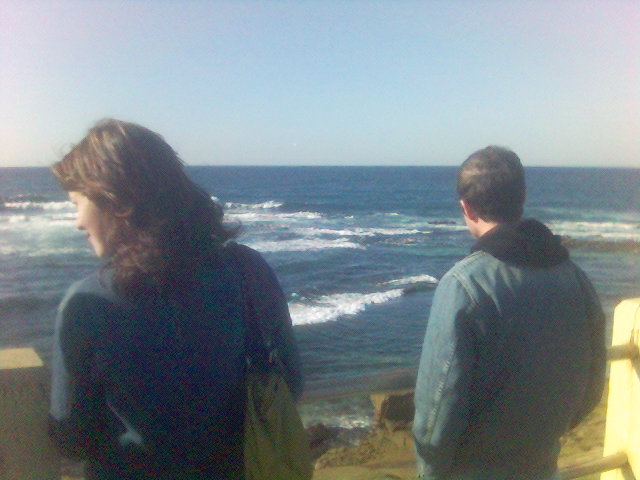
The whole gang (except me, who is taking the picture) was joined by Æleen Frish for a dicussion about nothing in particular. Later we went on a litter excursion to somewhere and looked at some seals. It was nice weather. We also ended up eating lunch.