FP7 EUBORDERSCAPES
UiT The Arctic University of Norway through the Border Poetics/Border Culture research group is a participating partner in the EU research project EUBORDERSCAPES (2012-16).
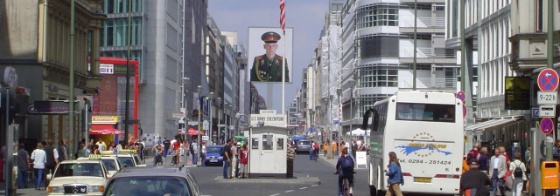
EUBORDERSCAPES (2012-16) is an interdisciplinary research project that brings together leading research environments from the social sciences and the humanties to increase our understanding of the changing nature of borders and bordering in Europe. The project is financed by the European Commission as part of the Seventh Frame Programme (FP7), and coordinated by the University of Eastern Finland.
The Border Culture/Border Poetics research group at UiT is responsible for the coordination of work package 10, “Border Crossing and Cultural Production”, and contributes to other work packages in the project.
Objectives
In order to gauge its significance, conceptual change in the study of borders must be seen in relation to fundamental social, economic and geopolitical transformations that have taken place in the past decades. In addition, major paradigmatic shifts in scientific debate, and in the social sciences in particular, must also be considered. Recognising the close interrelationships between social change and paradigm shifts, the EUBORDERSCAPES project will analyse the evolving concept of borders in terms of a mutually linked emergence of post-national, post-colonial, post-modernist and post-Communist strands of inquiry. State borders are the frame of reference, rather than ethnographic/anthropological boundaries. However, this approach emphasises the social significance and subjectivities of state borders while critically interrogating objective categories of state territoriality and international relations. The research proposed here will, furthermore, not only be focused at the more general, at times highly abstract, level of conceptual change. This approach will also allow us to compare and contrast how different and often contested conceptualisations of state borders (in terms of their political, social, cultural and symbolic significance) resonate in concrete contexts at the level of everyday life.
“Border Crossings and Cultural Production”
The Border Poetics / Border Culture research group coordinates work package 10 in the project, which relates to “cultural production” and artistic endeavour to the social construction of borders. This work package explores different literary and artistic examples of how culturally produced representations have contributed to socio-political interpretations of state borders as well as challenged official meanings, symbolisms and functions attached to state borders. This work package opens a humanities perspective that is not merely additional to social science approaches and that also promotes a more comprehensive understanding of the role of cultural production as a bordering practise. Read more on separate page.
Within work package 10, the UiT The Arctic University of Norway cooperates with the University of Eastern Finland, the Universitat Autònoma de Barcelona, the Ben-Gurion University of the Negev, the University of Bergamo, the Centre national de la recherche scientifique/Pacte (Public policies, Political Action, Territory) in Grenoble, and the Centre for Independent Social Research in St. Petersberg.
The Border Poetics / Border Culture research group also contributes to the work packages ”Conceptual Change and the State of the Debate”, “Empirical Framework”, “Post-Colonial Bordering and Euro-African Borderscapes” and “Cross-Sectional Analysis and Policy Considerations”, along with various coordination work packages.
News
“Grenseforsking for 68 millionar kroner” (report from first workshop on University of Tromsø web site)
Project websites
Work Package 10: "Border Crossings and Cultural Production"
European Commission (CORDIS) documentation
Other links
EU Seventh Frame Programme (FP7)
EUs 7. rammeprogram (Forskningsrådet)
Other EU border research projects
EUBORDERSCAPES (290775) is Funded by the European Commission under the 7th Framework Programme (FP7-SSH-2011-1), Area 4.2.1 The evolving concept of borders