|
Import FS
ARK-2011: Arktisk arkeologi Omfang
10 studiepoeng | Emnetype
Teoretisk. | Emnenivå/studieår
Vanligvis tredje året. | Undervisningsspråk
Norsk eller engelsk. | Eksamenssemester
Vår, Høst
| Mål
Avansert emne. Passer i kombinasjon med andre fag som behandler de arktiske og subarktiske regionene.
| Innhold
Emnet gir en innledning til kulturell utvikling i den sirkumpolare regionen, med vekt på områdene utenfor nord Fennoskandia. Det fokuseres på felles problemstillinger angående maritime samfunn, forskjeller mellom kyst/innland, regional samhandling (interaksjon) og sosial kompleksitet. De teoretiske rammene brukt i konstruksjonen av arktisk arkeologi som forskningsobjekt evalueres og forholdet mellom dagens urfolk og arkeologi diskuteres.
| Undervisning
Emnet har varierte undervisningsformer. | Eksamen og vurdering
Det forventes at studenter skal være med på undervisning og delta i diskusjoner. Som arbeidskrav må studenter innlevere kort abstrakter av flere pensumartikler.
Eksamensform består av en 10-siders oppgave på et tema valgt av studenten og skrevet på et nordisk språk eller på engelsk.
Karakterskala A-E for bestått, F for ikke bestått. Det tilbys kontinueringseksamen ved karakteren F tidlig i det følgende semester.
| Kontaktperson
Brita Solvang/Millrid Holmeslet | Pensum
Se hjemmeside. | Hjemmeside
http://uit.no/arkeologi/emner/8
| Timeplaner
http://timeplan.uit.no/emne.php?year=2007&department=ALLE&module=ARK-2011-1 |
Undervisning høsten 2007
Orienteringsmøte: Onsdag 15. august kl 1015, rom L-133 Breiviklia | | Forelesning | Første gang: Torsdag 23.08. kl 1215, rom L-133 i Breiviklia
Ansv. leder Professor Bryan C Hood
Varighet: 1 Semester |
Utfyllende informasjon
 |
| den sirkumpolar verden (klikk for større) |
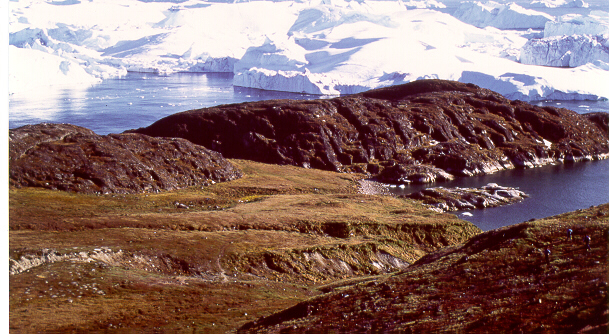 |
| Sermermiut boplass, Greenland (klikk for større) |
 |
| Old Bering Sea kultur, dekorert hvalrustann gjenstander, Tjukotka (klikk for større) |
This course might be given in English if warranted by the nature of the student group. Emnet kan gjennomføres på engelsk dersom studentkomposisjonen gir grunn til det.
Eksamensform: Karakteren baseres på en 10 siders forskningsoppgave som innleveres ved slutten av semesteret. Omkring midten av semesteret jeg vil be dere om å innlevere et forslag til en oppgave som vil bestå av et tema og en foreløpige litteraturlist. Ikke tenk at dere kan la det være til det siste øyeblikket-- dette er en sikkert oppskrift for stress og fiasko!!
Siden fakultetet kraver et eller annet "arbeidskrav" eller eksam i tillegg til en oppgave, dere vil også forberedre en "mappe" av 8 abstrakter av artikkler dere har lest, som en indikasjon at dere har engasjert noe materialet bort sett fra dette brukt i oppgaven. En halvdel av disse abstrakter skal innleveres i midten av semesteret, resten ved semesterslutte.
Litt mer om arbeidskrav:
Semesteroppgaven bør være 10 sider (ikke inkluderende figur og tabeller). Med forskningsoppgave mener jeg en oppgave hvori du velger temaet selv (hvis du er fortvilt kan jeg hjelpe) og gå på biblioteket for å finne frem den relevant litteratur. Dette betyr at en oppgave basert kun på reproduksjon av pensumlitteraturen er ikke akkseptabel. Dette er ikke en eksam hvori formålet er å spy opp pensumet!! Du må vise at du kan jobbe selvstendig.
Oppgaven må oppfylle de vanlige kravene til henvisning og litteraturlister.
Innleveringsfrist for oppgaven er mandag 3 desember (slutten av arbeidsdag)
Abstrakten bør ikke være mer enn 300 ord, og bør gi en konsis oppsumering av hovedpoengene i artikklene. Se på abstraktene i fagtidskrifter for noen eksempler.
KURS OVERSIKT
23.8 Orientasjon, og:
a) hva er “the North”?
– våres kulturell og arkeologiske konstruksjon av "the north" som en tankeobjekt og forskningsobjekt
-fysiske og økologiske egenskaper og begrensinger av den arktisk (for våres formål)
b) historie av "sirkumpolar arkeologi"
Les:
Fitzhugh (2002): fokus på s.91-103, 116-122, 132-134.
Moran (2000): s.113-118.
30.8 Menneskers tilpasning til arktiske miljøer; tidlig koloniseringer av den arktisk: den siste istid og den tidlig Holocene
Les:
Dixon (2001): kun s.277-278, 282-292.
Moran (2000): s.119-144
Slobodin (1999): kun pp.484-494.
6.9 Russisk Urals og vest-Sibir frem til 1000 e.kr.
Les:
Moszynska (1974)
Pitul'ko (1999): kun s.425-427.
Khlobystin (2005): s.172-186.
13.9 Øst-Sibir frem til 1000 e.kr.
Les:
Pitul'ko (1999): s.428-433.
Pitul'ko (1993)
Slobodin (1999): kun s.494-498.
20.9 Utviklingen av reindriftøkonomier og samfunn fra skandinavia til vest-Sibir
Les:
Krupnik (1993)
Storli (1996)
Khlobystin (2005): s.186-193.
27.9 Den Beringsund region fra tidlig Holocene til 1000 f.kr.: "rotene" til de paleoeskimoiske kulturene
Les:
Arutiunov og Fitzhugh (1988): s. 117-123.
Crowell (1988): s.130-132.
4.10 Paleoeskimoisk kolonisering av nord-amerika: fra Alaska til Grønland
Les:
Grønnow (2004)
Hood (1998)
11.10 Dorsetkulturen i arktisk Canada
Les:
Damkjar (2000)
Hood (1998)
McGhee (1996): s.120-148
Sutherland (2001)
18.10 Sub-arktisk indianer i Canada og Alaska
Les:
Clark (1991) s.56-78.
Fitzhugh (2002): kun s.122-125.
Hood (2000)
25.10 Beringsundet fra 1000 f.kr. til 1500 e.kr.
Les:
Arutiunov og Fitzhugh (1988): s.124-129.
Crowell (1988): s.132-140.
Rainey (1971)
Sheehan (1985)
1.11 Thulekulturen: fra Alaska til Grønland
Les:
Maxwell (1985) s.247-250, 262-269, 273-289.
Savelle (2002)
8.11 Utvidelse av det europeisk verdenssystem inni den arktisk (1): de norrøne på Grønland
Les:
Arneborg (2000)
McGovern (2000)
15.11 Utvidelse av det europeisk verdenssystem inni den arktisk (2): kontaktforhold med Inuit i øst-arktisk Canada og på Grønland.
Les:
Gulløv (2004): s.328-337.
Kaplan (1985)
22.11 Europeiske hvalfangere og jeger på Svalbard
Les:
Helberg og Jørgensen (1996)
Hultgreen (2005)
29.11 Sirkumpolar arkeologi innenfor den nåværende sosialkonteksten
Les:
Falch og Skandfer (2004)
Rowley (2002)
Pensum
 |
| Sen-vinter på sjø-isen, Labrador, Canada (klikk for større) |
 |
| Dorset Paleoeskimoisk vinterhus, Hebron Fjord, Labrador, Canada (klikk for større) |
Lesestoff vil bestå av en kompendium av obligatoriske artikler. Den følgende list inkluderer de obligatoriske artiklene (markert *) samt annet material som kan brukes til videre studie eller til oppgaver.
Sirkumpolar oversikt og generell litteratur:
Bravo, M. and S. Sorlin (2002). Narrative and Practice--An Introduction. In Narrating the Arctic. A Cultural History of Nordic Scientific Practices. Science History Publications, Canton.
Damas, D. (ed.) (1984. Handbook of North American Indians, Volume 5, Arctic. Washington DC: Smithsonian Institution Press.
Dumond, D. E. (1987). The Eskimos and Aleuts. London: Thames and Hudson.
Fitzhugh, W. (1975). Prehistoric Maritime Adaptations of the Circumpolar Zone. Mouton, The Hague.
*Fitzhugh, W. (2002). ‘Yamal to Greenland: Global Connections in Circumpolar Archaeology’, In Archaeology: the Widening Debate, edited by B. Cunliffe, W. Davies, and C. Renfrew. Oxford: Oxford University Press, 91-144.
Gulløv, H. C. (ed.) (2004) Grønlands Forhistorie. Gyldendal, Copenhagen.
Helm, J. (ed.) (1981) Handbook of North American Indians, Volume 6, Subarctic. Washington DC: Smithsonian Institution Press.
Hood, B. (in press) 'The Circumpolar Zone'. In The Oxford Handbook of Archaeology, edited by B. Cunliffe, C. Gosden and R. Joyce. Oxford University Press.
Moller, F. and S. Pehkonen (2003). Discursive Landscapes of the European North. In Encountering the North. Cultural Geography, International Relations and Northern Landscapes. Ashgate, Aldershot.
*Moran, E. (2000). Human Adaptability to Arctic Zones, In Human Adaptability. An Introduction to Ecological Anthropology. (2nd edition). Boulder: Westview Press. p.113-144.
Tidlig kolonisering
*Dixon, E. J. (2001). ‘Human Colonization of the Americas: Timing, Technology and Process’. Quaternary Science Reviews, 20:277-99.
Madsen, D.B. (ed.) (2004). Entering America. Northeast Asia and Beringia Before the Last Glacial Maximum. University of Utah Press, Salt Lake City.
Pavlov, P., Svendsen, J. I., and Indrelid, S. (2001). ‘Human Presence in the European Arctic nearly 40,000 Years Ago’. Nature, 413:64-67.
*Slobodin, S. (1999). Northeast Asia in the Late Pleistocene and Early Holocene. World Archaeology 30:484-502.
West, F. H. (1996). ‘Beringia and New World Origins II. The Archaeological Evidence’, in F. H. West (ed.), American Beginnings. The Prehistory and Palaeoecology of Beringia. Chicago: University of Chicago Press, 537-59.
Russisk Urals og Siber
Chard, C. (1974). Northeast Asia in Prehistory. University of Wisconsin Press, Madison.
Derev’anko, A. P. (1998). The Paleolithic of Siberia: New Discoveries and Interpretations. Urbana: University of Illinois Press.
Goebel, T. (1999) Pleistocene Human Colonization of Siberia and Peopling of the Americas: An Ecological Approach. Evolutionary Anthropology 8:208-226.
*Khlobystin, L. P. (2005) Taymyr. The Archaeology of Northernmost Eurasia. Contributions to Circumpolar Anthropology 5, National Museum of Natural History, Smithsonian Institution, Washington DC.
Koryakova, L. (2002). Between Steppe and Forest: Iron Age Societies of the Urals, in K. Boyle, C. Renfrew and M. Levine (eds.), Ancient Interactions: East and West in Eurasia. Cambridge: McDonald Institute for Archaeological Research, 265-92.
Koryakova, L, og Epimakhov, A. (2007). The Urals and Western Siberia in the Bronze and Iron Ages. Cambridge University Press.
Martynov, A. I. (1991). The Ancient Art of Northern Asia. Urbana: University of Illinois Press.
Mochanov, Y. A. (1969a). ‘The Early Neolithic of the Aldan’. Arctic Anthropology, 6/1:95-103.
Mochanov, Y. A. (1969b). ‘The Bel’kachinsk Neolithic Culture on the Alda’. Arctic Anthropology, 6/1:104-114.
Mochanov, Y. A. (1969c). ‘The Ymyiakhtakh Late Neolithic Culture’. Arctic Anthropology, 6/1:115-118.
*Moszynska, W. (1974). The Material Culture and Economy of Ust-Poluy. In Chernetsov, V. N., and Moszynska, W. (eds.), Prehistory of Western Siberia. Montreal: McGill-Queen’s University Press, 75-113.
Okladnikov, A. P. (1970). Yakutia Before its Incorporation into the Russian State. McGill-Queens University Press, Montreal.
*Pitul'ko, V. V. (1993). An Early Holocene Site in the Siberian High Arctic. Arctic Anthropology 30(1):13-21.
*Pitul’ko, V. V. (1999). Ancient Humans in Eurasian Arctic Ecosystems: Environmental Dynamics and Changing Subsistence. World Archaeology, 30:421-36.
Pitul’ko, V. V. (2001). ‘Holocene Stone Age of Northeast Asia’, in P. N. Peregrine and M. Ember (eds.), Encyclopedia of Prehistory. Volume 2: Arctic and Subarctic. New York: Kluwer Academic/Plenum Publishers, 46-58.
Pitul’ko, V. V. and Kasparov, A. K. (1996). ‘Ancient Arctic Hunters: Material Culture and Survival Strategy’. Arctic Anthropology, 33/1:1-36.
Pitul’ko, V. V., Nikolsky, P. A., Girya, E. Y., Basilyan, A. E., Tumskoy, V. E., Koulakov, S. A., Astakhov, S. N., Pavlova, E. Y., and Anisimov, M. A. (2004). ‘The Yana RHS Site: Humans in the Arctic Before the Last Glacial Maximum’. Science, 303:52-56.
Weber, A. and H. McKenzie (eds.) (2003). Prehistoric Foragers of the Cis-Baikal, Siberia. Canadian Circumpolar Institute Press, Edmonton.
Utviklingen av reindrift økonomier
Aronsson, K. Å. (1991). Forest Reindeer Herding AD 1-1800. An Archaeological and Palaeoecological Study in Northern Sweden. Archaeology and Environment 10. Umeå: Department of Archaeology, University of Umeå.
Hedman, S. D. (2003). Boplatser och Offerplatser. Ekonomisk strategi och boplatsmönster bland skogssamer 700-1600 AD. Studia Archaeologica Universitatis Umensis 17. Umeå: Institutionen för arkeologi och samiska studier, Umeå Universitet.
Ingold, T. (1980). Modes of Production (1): Hunting to Pastoralism. In Hunters, Pastoralists and Ranchers, pp.144-200. Cambridge University Press.
*Khlobystin, L. P. (2005) Taymyr. The Archaeology of Northernmost Eurasia. Contributions to Circumpolar Anthropology 5, National Museum of Natural History, Smithsonian Institution, Washington DC.
*Krupnik, I. (1993). The Rise of Reindeer Pastoralism in the Arctic. In Arctic Adaptations. Native Whalers and Reindeer Herders of Northern Eurasia, pp.160-184. Hanover: University Press of New England.
Mulk, I. M. (1994). Sirkas– ett samiskt fångstsamhälle I förändring Kr.f.- 1600 e.Kr. Studia Archaeologica Universitatis Umensis 6. Umeå: Arkeologiska Institutionen, Umeå Universitet.
Mulk, I. M. (1996). ‘The Role of the Sami in Fur Trading During the Late Iron Age and Nordic Medieval Period in the Light of the Sami Sacrificial Sites in Lapland, Northern Sweden’. Acta Borealia, 13/1:47-80.
Storli, I. (1993). ‘Sami Viking Age Pastoralism– Or “the Fur Trade Paradigm” Reconsidered’. Norwegian Archaeological Review, 26/1:1-20.
*Storli, I. (1996). ‘On the Historiography of Sami Reindeer Pastoralism’. Acta Borealia, 13(1):81-115.
Wallerström, T. (2000). ‘The Saami Between East and West in the Middle Ages: An Archaeological Contribution to the History of Reindeer Breeding’. Acta Borealia, 17/1:3-39.
Beringsund region fra tidlig Holocene til 1000 f.kr.: "rotene" til de paleoeskimoiske kulturene
Ackerman, R. E. (1982). ‘The Neolithic-Bronze Age Cultures of Asia and the Norton Phase of Alaskan Prehistory’. Arctic Anthropology, 19/2:11-38.
*Arutiunov, S. A., and Fitzhugh, W. W. (1988). ‘Prehistory of Siberia and the Bering Sea’, in W. W. Fitzhugh and A. Crowell (eds.), Crossroads of Continents. Cultures of Siberia and Alaska. Washington DC: Smithsonian Institution Press, 117-29.
*Crowell, A. (1988). ‘Prehistory of Alaska’s Pacific Coast’, in W. W. Fitzhugh and A. Crowell (eds.), Crossroads of Continents, Cultures of Siberia and Alaska. Washington D.C.: Smithsonian Institution Press, 130-40.
Dikov, N. N. (1965). ‘The Stone Age of Kamchatka and the Chukchi Peninsula in the Light of New Archaeological Data’. Arctic Anthropology, 3/1:10-25.
Fitzhugh, B. (2003). The Evolution of Complex Hunter-Gatherers. Archaeological Evidence from the North Pacific. Kluwer Academic/Plenum, New York.
Lebedintsev, A. I. (1998). Maritime Cultures of the North Coast of the Sea of Okhotsk. Arctic Anthropology, 35/1:296-320.
McCartney, A. P. (1984). ‘Prehistory of the Aleutian Region’, in D. Damas (ed.), Handbook of North American Indians, Volume 5, Arctic. Washington DC: Smithsonian Institution Press, 19-35.
Orekhov, A. A. (1998). ‘The Development of Maritime Adaptations Among the Early Populations of the Northwest Bering Sea Region’. Arctic Anthropology, 35/1:263-80.
West, F. H. (ed.) (1996). American Beginnings. The Prehistory and Palaeoecology of Beringia. University of Chicago Press.
Paleoeskimo kolonisering av nord-amerika
Gotfredsen, A. B. and T. Møbjerg (2004). Nipisat - A Saqqaq Culture Site in Sisimiut, Central West Greenland. Meddelelser om Grønland, Man & Society 31.
Grønnow, B. (ed.) (1996) The Paleo-Eskimo Cultures of Greenland. New Perspectives in Greenlandic Archaeology. Danish Polar Center Publication No. 1. Copenhagen: Danish Polar Center,
Grønnow, B. (1996). ‘The Saqqaq Tool Kit– Technological and Chronological Evidence from Qeqertasussuk, Disko Bugt’, in B. Grønnow (ed.), The Paleo-Eskimo Cultures of Greenland. New Perspectives in Greenlandic Archaeology. Danish Polar Center Publication No. 1. Copenhagen: Danish Polar Center, 17-34.
*Grønnow, B. (2004) Saqqaqkulturen. In Grønlands Forhistorie, edited by H. C. Gulløv, pp. 66-108. Gyldendal, Copenhagen.
Grønnow, B. and Jensen, J. F. (2003). The Northernmost Ruins of the Globe. Eigil Knuth’s Archaeological Investigations in Peary Land and Adjacent Areas of High Arctic Greenland. Copenhagen: Meddelelser om Grønland, Man & Society 29.
Grønnow, B. and Meldgaard, M. (1991). De første vestgrønlændere. Resultaterne fra 8 års undersøgelser på Qeqertasussuk-bopladsen i Disko Bugt. Tidskriftet Grønland, 39/4-7:103-44.
*Hood, B. (1998). 'Theory on Ice. The Discourse of Eastern Canadian Arctic Paleoeskimo Prehistory'. Acta Borealia 15/2:3-58.
Jensen, J. F. (2006) The Stone Age of Qeqertarsuup Tunua (Disko Bugt). A Regional Analysis of the Saqqaq and Dorset Cultures of Central West Greenland. Meddelelser om Grønland, Man & Society 32, Danish Polar Center, Copenhagen.
Maxwell, M. S. (1985). Prehistory of the Eastern Arctic. Orlando: Academic Press.
McGhee, R. S. (1996). Ancient People of the Arctic. Vancouver, UBC Press.
Meldgaard, M. (2004). Ancient Harp Seal Hunters of Disko Bay. Subsistence and Settlement at the Saqqaq Culture Site Qeqertasussuk (2400-1400 BC), West Greenland. Copenhagen: Meddelelser om Grønland, Man & Society 30.
Dorsetkulturen av arktisk Canada
*Damkjar, E. (2000). ‘A Survey of Late Dorset Longhouses’, in M. Appelt, J. Berglund and H. C. Gulløv (eds.), Identities and Cultural Contacts in the Arctic. Danish Polar Center Publication No. 8. Copenhagen: The Danish National Museum and the Danish Polar Center, 170-80.
*Hood, B. (1998). 'Theory on Ice. The Discourse of Eastern Canadian Arctic Paleoeskimo Prehistory'. Acta Borealia 15/2:3-58.
Maxwell, M. S. (1985). Prehistory of the Eastern Arctic. Orlando: Academic Press.
*McGhee, R. S. (1996). "How an Arctic Culture was Transformed", and "The Dorset People", In Ancient People of the Arctic. Vancouver, UBC Press.
*Sutherland, P. (2001). ‘Shamanism and the Iconography of Palaeo-Eskimo Art’, in N. S. Price (ed.), The Archaeology of Shamanism. London: Routledge, 135-145.
Subarktisk Indianer
*Clark, D. W. (1991). The Threshold of History in the Northwest. In Western Subarctic Prehistory. Hull: Canadian Museum of Civilization.
*Fitzhugh, W. (2002). ‘Yamal to Greenland: Global Connections in Circumpolar Archaeology’, In Archaeology: the Widening Debate, edited by B. Cunliffe, W. Davies, and C. Renfrew. Oxford: Oxford University Press, 91-144 (only p.122-125).
Holly, D. H. (2002). ‘Subarctic “Prehistory” in the Anthropological Imagination’. Arctic Anthropology, 39/1-2:10-26.
*Hood, B.(2000). ‘Pre-Dorset/Maritime Archaic Social Boundaries in Labrador’, in M. Appelt, J. Berglund and H. C. Gulløv (eds.), Identities and Cultural Contacts in the Arctic. Danish Polar Center Publication No. 8. Copenhagen: The Danish National Museum and Danish Polar Center, 120-28.
Hood, B.(1993). 'The Maritime Archaic Indians of Labrador. Investigating Prehistoric Social Organization'. Newfoundland Studies 9/2:163-184.
Beringsundet fra 1000 f.kr. til 1500 e.kr.
*Arutiunov, S. A., and Fitzhugh, W. W. (1988). ‘Prehistory of Siberia and the Bering Sea’, in W. W. Fitzhugh and A. Crowell (eds.), Crossroads of Continents. Cultures of Siberia and Alaska. Washington DC: Smithsonian Institution Press, 117-29.
Bandi, H. G. (1995). ‘Siberian Eskimos as Whalers and Warriors’, in A. P. McCartney (ed.), Hunting the Largest Animals. Native Whaling in the Western Arctic and Subarctic. Edmonton: Occasional Publication No. 36, Canadian Circumpolar Institute, University of Alberta, 165-84.
Collins, H. B. (1937). Archeology of St. Lawrence Island, Alaska. Smithsonian Miscellaneous Collections vol. 96. Washington: Smithsonian Institution.
*Crowell, A. (1988). ‘Prehistory of Alaska’s Pacific Coast’, in W. W. Fitzhugh and A. Crowell (eds.), Crossroads of Continents, Cultures of Siberia and Alaska. Washington D.C.: Smithsonian Institution Press, 130-40.
Csonka, Y. (2003) Ekven--A Prehistoric Whale Hunters' Settlement on the Asian Shore of Bering Strait. In Indigenous Ways to the Present. Native Whaling in the Western Arctic, edited by A. P. McCartney, pp.109-136. Canadian Circumpolar Institute Press, Edmonton.
Fitzhugh, B. (2003). The Evolution of Complex Hunter-Gatherers. Archaeological Evidence from the North Pacific. Kluwer Academic/Plenum, New York.
Gusev, S. V., Zagoroulko, A. V., and Porotov, A. V. (1999). ‘Sea Mammal Hunters of Chukotka, Bering Strait: Recent Archaeological Results and Problems’. World Archaeology, 30/3:354-69.
Larsen, H., and Rainey, F. (1948). Ipiutak and the Arctic Whale Hunting Culture. New York: Anthropological Papers of the American Museum of Natural History, Volume 42.
Mason, O. K. (1998). ‘The Contest Between the Ipiutak, Old Bering Sea, and Birnirk Polities and the Origin of Whaling During the First Millennium A.D. Along Bering Strait’. Journal of Anthropological Archaeology, 17:240-325.
*Rainey, F. (1971). The Ipiutak Culture: Excavations at Point Hope, Alaska. Addison-Wesley Modular Publications, Reading.
Rudenko, S. I. (1961). The Ancient Culture of the Bering Sea and the Eskimo Problem. Arctic Institute of North America, Anthropology of the North, Translations from Russian Sources No. 1. Toronto: University of Toronto Press.
*Sheehan, G. W. (1985). ‘Whaling as an Organizing Focus in Northwestern Alaskan Eskimo Societies’, in T. D. Price and J. A. Brown (eds.), Prehistoric Hunter-Gatherers: The Emergence of Cultural Complexity. San Diego: Academic Press. 123-54.
Thule kulturen
Gulløv, H. C. (2004). Nunarput, Vort Land. Thule-kulturen. In Grønlands Forhistorie, edited by H. C. Gulløv, pp.283-328. Gyldendal, Copenhagen.
*Maxwell, M. S. (1985). "Thule Whale Hunters" In Prehistory of the Eastern Arctic. Orlando: Academic Press.
Mathiassen, T. (1927). Archaeology of the Central Eskimos. Report of the Fifth Thule Expedition, vol. IV. Copenhagen: Gyldendalske Boghandel, Nordisk Forlag.
McGhee, R. S. (1969/70). ‘Speculations on Climatic Change and Thule Culture Development’. Folk, 11-12:173-84.
McGhee, R.(2000). ‘Radiocarbon Dating and the Timing of the Thule Migration’, in M. Appelt, J. Berglund and H. C. Gulløv (eds.), Identities and Cultural Contacts in the Arctic. Danish Polar Center Publication No. 8. Copenhagen: The Danish National Museum and Danish Polar Center, 181-91.
Park, R. W. (1993). ‘The Dorset-Thule Succession in Arctic North America: Assessing Claims for Culture Contact’. American Antiquity, 58:203-34.
Park, R. W. (1999). ‘Demography and the Reconstruction of Social Organization from Thule Wintering Sites in Arctic Canada’. Canadian Journal of Archaeology, 22:115-126.
*Savelle, J. M. (2002). ‘Logistical Organization, Social Complexity, and the Collapse of Prehistoric Thule Whaling Societies in the Central Canadian Arctic Archipelago’, in B. Fitzhugh and J. Habu (eds.), Beyond Foraging and Collecting: Evolutionary Change in Hunter-Gatherer Settlement Systems. New York: Kluwer Academic/Plenum Publishers, 73-90.
Savelle, J. M., and A.P McCartney (1988). Geographical and Temporal Variation in Thule Eskimo Subsistence Economies: A Model. Research in Economic Anthropology 10:21-72.
Savelle, J. M. and Wenzel, G. W. (2003). ‘Out of Alaska: Reconstructing the Social Structure of Prehistoric Canadian Thule Culture’, in J. Habu, J. M. Savelle, S. Koyama and H. Hongo (eds.), Hunter-Gatherers of the North Pacific Rim. Senri Ethnological Studies 63. Osaka: National Museum of Ethnology, 103-121.
Whitridge, P. J. (1999). The Construction of Social Difference in a Prehistoric Inuit Whaling Community. Unpublished Ph.D. Dissertation, Department of Anthropology, Arizona State University, Tempe.
Utvidelsen av den europeisk verdenssystem inni den arktisk (1): norrøn på Grønland
*Arneborg, J. (2000). ‘Greenland and Europe’, in W. W. Fitzhugh and E. I. Ward (eds.), Vikings. The North Atlantic Saga. Washington DC: Smithsonian Institution Press, 304-17.
Berglund, J. (2000). ‘The Farm Beneath the Sand’, in W. W. Fitzhugh and E. I. Ward (eds.), Vikings. The North Atlantic Saga. Washington: Smithsonian Institution Press, 295-303.
Enghoff, I. B. (2003). Hunting, Fishing and Animal Husbandry at The Farm Beneath the Sand, Western Greenland. An Archaeozoological Analysis of a Norse Farm in the Western Settlement. Meddelelser om Grønland, Man & Society 28.
Gulløv, H. C. (2000). ‘Natives and Norse in Greenland’, in W. W. Fitzhugh and E. I. Ward (eds.), Vikings. The North Atlantic Saga. Washington DC: Smithsonian Institution Press, 318-26.
Gulløv, H. C. (1997). From Middle Ages to Colonial Times. Archaeological and Ethnohistorical Studies of the Thule Culture in South West Greenland 1300-1800 AD. Copenhagen: Meddelelser om Grønland, Man & Society 23.
Gulløv, H. C. (2004). Nunarput, Vort Land. Thule-kulturen. In Grønlands Forhistorie, edited by H. C. Gulløv, pp. 328-343. Gyldendal, Copenhagen.
McGovern, T. H. (1985). ‘Contributions to the Paleoeconomy of Norse Greenland’. Acta Archaeologica, 54:73-122.
*McGovern, T. (2000). ‘The Demise of Norse Greenland’, in W. W. Fitzhugh and E. I. Ward (eds.), Vikings. The North Atlantic Saga. Washington DC: Smithsonian Institution Press, 327-39.,
Sutherland, P. (2000). ‘The Norse and Native North Americans’, in W. W. Fitzhugh and E. I. Ward (eds.), Vikings. The North Atlantic Saga. Washington DC: Smithsonian Institution Press, 238-47.
Sutherland, P. (2000). ‘Strands of Culture Contact: Dorset-Norse Interactions in the Canadian Eastern Arctic’, in M. Appelt, J. Berglund and H. C. Gulløv (eds.), Identities and Cultural Contacts in the Arctic. Danish Polar Center Publication No. 8. Copenhagen: The Danish National Museum and Danish Polar Center, 159-69.
Wallace, B. L. (2000). ‘The Viking Settlement at L’Anse aux Meadows.’ in W. W. Fitzhugh and E. I. Ward (eds.), Vikings. The North Atlantic Saga. Washington DC: Smithsonian Institution Press, 208-216.
Utvidelse av det europeisk verdenssystem inni den arktisk (2): kontaktforhold med Inuit i øst-arktisk Canada og på Grønland
Gulløv, H. C. (1997). From Middle Ages to Colonial Times. Archaeological and Ethnohistorical Studies of the Thule Culture in South West Greenland 1300-1800 AD. Copenhagen: Meddelelser om Grønland, Man & Society 23.
*Gulløv, H. C. (2004). Nunarput, Vort Land. Thule-kulturen. In Grønlands Forhistorie, edited by H. C. Gulløv, pp. 328-337. Gyldendal, Copenhagen.
*Kaplan, S. A. (1985). ‘European Goods and Socio-Economic Change in Early Labrador Inuit Society’, in W. W. Fitzhugh (ed.), Cultures in Contact. The European Impact on Native Cultural Institutions in Eastern North America, A.D. 1000-1800. Washington DC: Smithsonian Institution Press, 45-69.
Svalbard
Arlov, T. B. (1996). Svalbards historie 1596-1996. Oslo, Aschehough.
Braat, J. (1984). Dutch Activities in the North and the Arctic During the Sixteenth and Seventeenth Centuries. Arctic 37:473-480.
Hacquebord, L., og W. Vroom. (1988). Walvisvaart in de Gouden Eeuw. Opgravingen op Spitsbergen. Rijksmuseum, Arctisch Centrum, Rijksuniversiteit Groningen, De Bataafsche Leeuw, Amsterdam.
Hacquebord, L., F. Steenhuisen, og H. Waterbolk (2003)
English and Dutch Whaling Trade and Whaling Stations in Spitsbergen (Svalbard) before 1660. International Journal of Maritime History 15(2): 117-134.
Helberg, B. (1998). Svalbards arkeologiske historie. Tromura, kulturhistorie, nr. 30.
*Helberg, B, and Jørgensen, R. (1996). Kvalfangst, russefangst og arkeologi på Svalbard. Norske fortidsminnesmerkers bevaring, Årbok 1996: 61-78.
Hultgreen, T. (2000). Den russiske fangsten på Svalbard. En reanalyse av arkeologiske og historiske kilder. Dr.Art avhandling i arkeologi, Universitetet i Tromsø.
*Hultgreen, T. (2005). The Chronology of the Russian Hunting Stations on Svalbard: A Reconsideration. Acta Borealia 22(1):79-91.
Jasinski, M. (1993). Pomors in Grumant. Archaeological Studies of Russian Hunting Stations in Svalbard. Doktorgradsavhandling i arkeologi, Universitetet i Tromsø.
Starkov, V. (2005). Methods of Russian Heritage Site Dating on the Spitsbergen Archipelago. Acta Borealia 22(1):63-78.
Sirkumpolar arkeologi i den nåværende sosialkonteksten
Bray, T. L., and T. W. Killion (1994) Reckoning with the Dead. The Larsen Bay Repatriation and the Smithsonian Institution. Smithsonian Institution Press, Washington DC.
Buggey, S. (2004) An Approach to Aboriginal Cultural Landscapes in Canada. In Northern Ethnographic Landscapes: Perspectives from Circumpolar Nations, edited by I. Krupnik, R. Mason and T. Horton, pp. 17-44. Contributions to Circumpolar Anthropology 6, National Museum of Natural History, Smithsonian Institution, Washington DC.
*Falch, T. and M. Skandfer (2004). Sami Cultural Heritage in Norway. Between Local Knowledge and the Power of the State. In Northern Ethnographic Landscapes: Perspectives from Circumpolar Nations, edited by I. Krupnik, R. Mason and T. Horton, pp. 356-375. Contributions to Circumpolar Anthropology 6, National Museum of Natural History, Smithsonian Institution, Washington DC.
Grøn, O. and O. Kuznetsov. (2003) Evenki Forest Hunters. Ethno-Archaeology and the Archaeological Settlement Concept. In Prehistoric Foragers of the Cis-Baikal, Siberia, edited by A. Weber and H. McKenzie, pp.197-215. Canadian Circumpolar Institute Press, Edmonton.
Henderson, L. (1997) The Arviaq and Qikiqtaarjuk Oral History Project. In At a Crossroads. Archaeology and First Peoples in Canada, edited by G. P. Nicholas and T. D. Andrews, pp.197-213. Department of Archaeology, Simon Fraser University, Burnaby.
*Rowley, S. (2002) Inuit Participation in the Archaeology of Nunavut: A Historical Overview. In Honoring our Elders. A History of Eastern Arctic Archaeology, edited by W. Fitzhugh, S. Loring and D. Odess, pp.261-271. Contributions to circumpolar Anthropology 2, Smithsonian Institution, Washington DC.
|


