


-

 Studier
og studietilbud
-

 Student
og studietiden
-

 Forskning
og innovasjon


Forside
/ Om HiST
/ Fakulteter
/ Fakultet for lærer- og tolkeutdanning
/ Ansatte ved lærer og tolk
/ Nilsson, Anna-Lena
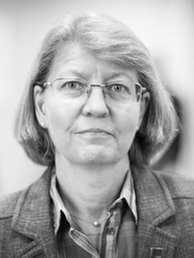
Nilsson, Anna-Lena
Professor ved Fakultet for lærer- og tolkeutdanningBesøksadresse: Elgestergate 10
Seksjon/program: Tegnspråk og tolkeutdanning
Telefon: 73 41 24 72
E-post:
Fagområde
Sign Language Linguistics & Sign Language Interpreting
Forskning
Research interests:
- Sign Language Linguistics, with a special interest in sign language discourse produced by simultaneous interpreters.
- Corpus-based approaches to signed language research.
- Discourse structure and cohesion in signed language.
- Signed language interpreting.
• List of publications:
http://su.diva-portal.org/smash/resultList.jsf?dswid=-7045&af=[]&aq=[[{%22personId%22%3A%22annalena+OR+0000-0003-3150-1492%22}]]&aqe=[]&aq2=[[]]&language=en&query=&jfwid=-7045
• In May 2010 I defended my PhD-thesis, which was titled Studies in Swedish Sign Language. Reference, Real Space Blending, and Interpretation.
http://su.diva-portal.org/smash/record.jsf?searchId=1&pid=diva2:305811&rvn=3
Faglige prosjekter
• During 2012–2014 I had a research project: Use of Signing Space in Simultaneous Sign Langauge Interpreting., which was financed by the Swedish Research Council (Vetenskapsrådet):
"A fundamental difference between signed and spoken languages is that in signed languages the signer uses the three dimensional space in front of him/her (signing space) and his/her own body for reference and cohesion. Optimal use of signing space for this purpose is dependent on the signer’s knowledge of what s/he is going to talk about. In an interpreted situation, the content and referents of the discourse come to the interpreter gradually. It is therefore difficult for an interpreter working simultaneously into a signed language to know how to best use these linguistic tools, since there is no way s/he can know exactly what will happen next in the discourse.
Swedish Sign Language (SSL) interpreters are filmed when interpreting from spoken Swedish into SSL. Their signed language production is analyzed using a model based in Cognitive Linguistics and Conceptual Blending Theory. Focus is on whether interpreters use signing space as it is used in spontaneously produced SSL, or if the interpreting situation makes them use different strategies.
To date there are only a few studies published regarding the linguistic form of simultaneously interpreted signed language. There are no studies at all regarding such a key feature of signed languages as the use of signing space for reference and cohesion in such discourse. The results of this study will generate new knowledge also internationally as regards the linguistic form of signed language discourse produced by interpreters."
• During 2010-2012 I was one of the researchers involved in the EU-financed project MEDISIGNS - Medical Sign Language & Interpreter Training: http://www.medisignsproject.eu/MEDISIGNS/About_MEDISIGNS.html
The MEDISIGNS project, promoted by Interesource Group, is aimed at Deaf people, sign language interpreters and healthcare professionals to improve standards of healthcare amongst the Deaf Community whilst upskilling interpreters in the medical context. The online course will be offered by the Centre for Deaf Studies Trinity College.
Partners include experts from Ireland, Cyprus, Poland, Sweden and the UK. Products include:
- multilingual online course on medical interpreting
- a European report on Deaf healthcare provision
- a Three-Way Guide on Deaf Communication - the medic, the patient the interpreter
- seminars and workshops
- a DVD Documentary and a multilingual website.
Styrer, råd og utvalg
Faglig representant fra HiST i Nasjonalt fagråd for tegnspråk og tolking (NFRTT):
http://www.uhr.no/rad_og_utvalg/nasjonale_fagrad/oversikt?submethod=org&id=220

Høgskolen i Sør-Trøndelag - HiST
Pb 2320. 7004 Trondheim
Tlf.: 73 55 90 00
Faks: 73 55 90 51
E-post: postmottak@hist.no
Kunnskapen du trenger


